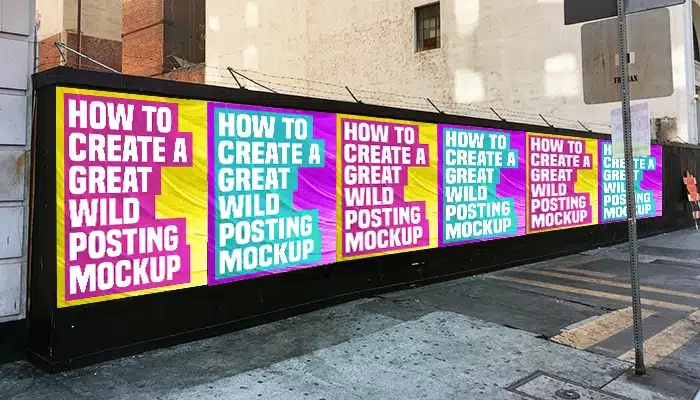
Wild Posting® is everywhere—on construction barricades in SoHo, along Melrose in Los Angeles, wrapped around pop-up venues in Austin. It’s bold, fast, and surprisingly cost-effective. The first question most brands ask, though, is simple: “Is Wild Posting® legal?”
The honest answer: yes, when done correctly. Cities regulate where posters can go and who can put them up, but there are legal pathways in nearly every major market. The key is using private property with permission or working with partners who hold legal wall contracts. Below, we break down how it plays out in top U.S. cities (plus a few international notes), and share practical steps to launch a campaign without headaches.
What “Legal” Means in Wild Posting®
When people say “legal,” they usually mean three things:
- Permits & permissions: Do I need one? Who issues it?
- Placement rules: Where can posters go—and where are they prohibited?
- Enforcement risk: Could the city remove posters or issue fines?
Most cities ban posting on public property (think utility poles, traffic signs, transit structures). That doesn’t shut the door on Wild Posting®—it simply means campaigns should run on private walls where the owner has granted permission. Professional operators maintain networks of permitted surfaces so brands can post legally, at scale, and with better longevity.
New to formats and sizing? Our guide to Wild Posting® poster sizes explains the standards we use in the U.S. and abroad, and how size affects cost and visibility.
City-by-City Overview
Every market has its own personality and enforcement style. Here’s a practical take on the big ones.
Los Angeles
LA is a massive Wild Posting® market—Silver Lake, Echo Park, Hollywood, DTLA, the Arts District—there’s foot traffic and culture everywhere. The city does prohibit posting on public property, but there’s a deep network of legal, contracted walls on private sites.
What to know: Work with an operator who can place you on permitted surfaces. You’ll get better locations and fewer surprises. For format comparisons, this Wild Posting® vs. outdoor advertising breakdown is helpful when you’re choosing between street-level posters, benches, and billboards.
New York City
In NYC, Wild Posting® sits right at the intersection of art and advertising—Lower East Side, Soho, Williamsburg, Bushwick. The Department of Sanitation is strict about public fixtures, but campaigns thrive on private property with landlord approval.
What to know: Stick to legal walls and plan for fast refresh cycles around high-traffic corridors. Footfall is exceptional; creative that reads at a glance performs best.
San Francisco
From the Mission to SoMa, SF embraces creativity—but it’s more selective about where posters can live. Legal opportunities exist; you just have to plan a bit earlier.
What to know: Prioritize permitted sites near nightlife, venues, and transit hubs. If you’re weighing other formats in the Bay, see our quick guide to effective outdoor advertising.
Chicago
Chicago loves music, fashion, and film—perfect Wild Posting® territory. The Loop and Wicker Park deliver strong visibility; winters mean refreshes matter.
What to know: Use contracted walls. Weatherproof paper stocks and scheduled maintenance keep campaigns looking fresh.
Austin
Festival culture (SXSW, ACL) makes Austin a natural fit. Entertainment districts and corridors around the University of Texas perform especially well.
What to know: Respect city restrictions on public fixtures and focus on curated private walls. Timed waves during festival weeks can outperform a single long run.
Other Notables
- Seattle: Opportunities exist but are tighter; planning ahead is key.
- Miami: Growth market—private permissions recommended.
- Toronto & Vancouver: Strong poster culture; enforcement varies by neighborhood.
- London: Highly regulated, but legal poster contractors offer incredible reach in Shoreditch, Camden, and beyond.
How Legal Wild Posting® Works
Brands often picture Wild Posting® as “throw it up and go.” In reality, the best results come from a straightforward, compliant process:
- Wall access: We secure approvals from property owners and maintain a network of contracted surfaces.
- Creative & sizing: We match art to neighborhood and sightline. If you’re deciding between 24″×36″ and larger formats, start with this poster size guide.
- Scheduling: Flights are set by week or month, with install windows tailored to venue calendars and launch moments.
- Compliance & documentation: Where a permit is required, we handle it; where a landlord agreement is needed, it’s in place before paste hits the wall.
- Maintenance: We refresh, top up, and document with proofs to keep the campaign sharp.
If you’re weighing Wild Posting® against larger formats, our billboard services overview and bus bench advertising guide outline costs, placements, and typical use cases.
What Happens If You Post Illegally?
Unauthorized posting—on public fixtures or without property owner consent—can lead to fast removal, fines, and a PR headache you don’t need. It also tends to kill campaign performance: posters are up for less time and placements are less strategic. Legal programs deliver better dwell, better sightlines, and fewer surprises.
Creative & Strategy Tips (That Keep You Compliant)
- Design for the sidewalk: Big type, high contrast, clear hierarchy. Test read-distance for 5–10 feet.
- Think in clusters: Repetition wins. A grid of 24″×36″ posters can beat one oversized sheet if the wall and foot traffic are right.
- Refresh cadence: Weekly or biweekly refreshes hold attention in heavy-traffic corridors.
- Neighborhood mapping: Match message to vibe—arts districts, nightlife streets, venue blocks. (During festivals, go heavier.)
- Trackable elements: Use city-specific QR codes or vanity URLs to measure lift.
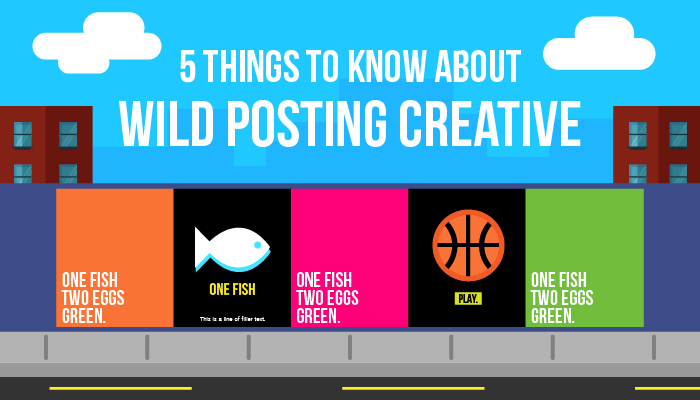
For inspiration across formats, you might like the roundup Good Wild Posting creative—a good reminder that simple ideas, executed well, travel far.
FAQs
Is Wild Posting® legal in Los Angeles?
Yes—on private property with permission or through contracted legal walls. Posting on public fixtures is prohibited.
Do I need a permit?
It depends on the city and the surface. Many placements run on private walls via landlord agreements; in some markets, additional permits apply. We handle the requirements either way.
How long do posters stay up?
Typically one to four weeks per flight, depending on wall, traffic, and refresh plan. Legal placements last longer and look better throughout the run.
What sizes work best?
The staple is 24″×36″ for readability and scale. See the full poster size guide for U.S. and international standards.
Can I combine Wild Posting® with other formats?
Absolutely. Street-level posters plus billboards or bus benches give you both grassroots impact and citywide reach.
Bottom Line
Wild Posting® is legal when you use the right walls, the right agreements, and the right team. That approach produces better sites, longer hold times, and stronger results—without the risk. If you’re launching in LA, NYC, SF, Chicago, Austin, or overseas, we’ll help you map neighborhoods, secure placements, and execute cleanly.
Ready to plan a campaign? Contact us to lock in locations and flight dates, or start with our quick comparison of Wild Posting® vs. other outdoor formats.