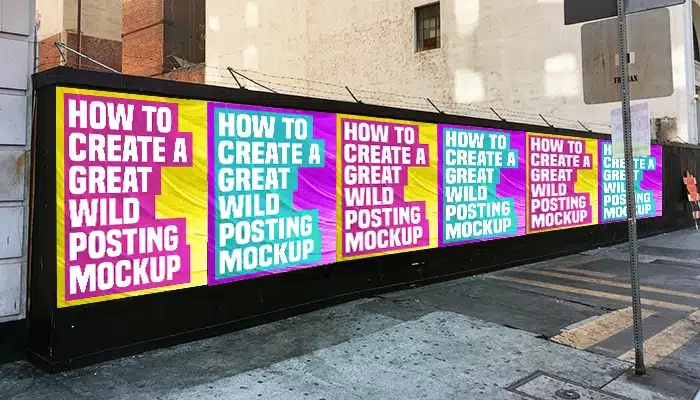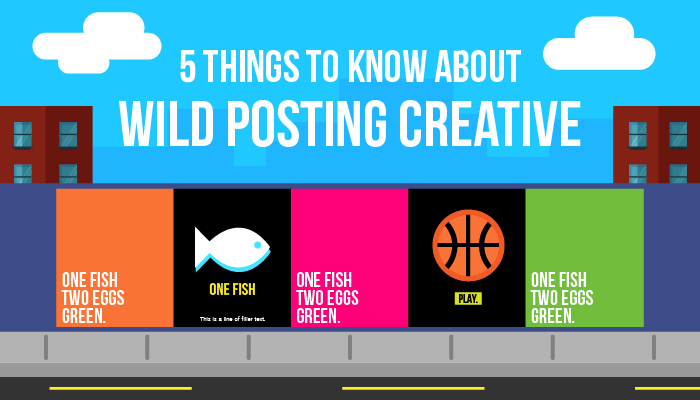
Wild Posting® — also known as wheatpasting — uses billboard poster paste to affix large-format posters to walls, construction barriers, and high-traffic surfaces. Here’s how a campaign works from start to finish.
Wild Posting® Step-by-Step Guide
Permitted vs. Unpermitted Wild Posting

When working with an agency, the first decision to make is whether you want your wheatpaste posters to be permitted or unpermitted.
Permitted Wild Posting® means that landlords allow posters to be placed on their buildings for a fee. This approach increases costs but ensures your posters won’t be removed or vandalized by property owners.
Unpermitted Wild Posting® involves placing posters without landlord permission. While this is less expensive and can create a rebellious, guerrilla marketing vibe, it increases the risk of posters being tagged, torn down, or papered over.
Pick a Target Area
Choosing a target area is critical for your wheatpasting campaign’s success.
What is a target area?
A target area is a specific location within a city where you want your posters displayed. For example:
- In Los Angeles: Santa Monica, Silver Lake, Melrose, etc.
- In New York: Brooklyn, Manhattan, Staten Island, etc.
Most campaigns involve 20–40 locations, but you can scale up depending on your budget. The more locations you choose, the higher the cost—but also the broader the reach.
Poster Size Options
Wheatpaste posters typically come in two standard sizes:
- 36×24: The most common size, ideal for eye-catching designs. View poster specs.
- 72×48: A larger size created by combining four 36×24 posters.
Your budget and campaign goals will determine the best size for your posters.
The Creative Process

The term “Creative” refers to the content and design of your marketing materials. If you don’t have a creative team, agencies can develop the materials for you. To ensure success, you’ll need to provide:
- The campaign’s focal point
- A color palette
- Your message, website URL, or social media handles
Flight Length
Flight length refers to how long your posters stay up. Most campaigns last two weeks, after which posters may become worn, discolored, or defaced. Longer campaigns (e.g., four weeks) often involve replacing the original posters with new designs halfway through.
An example: A music artist might promote a single during the first two weeks, then update the posters to announce the album’s release during the final two weeks.
Poster Deployment
Once your posters are designed and printed, they are sent to the street team along with instructions for placement. These instructions include the target areas and the number of posters per location. The billboard poster paste used in the application is what bonds the poster to the wall or barrier, making proper paste preparation essential to a clean, lasting result.
The street team captures 10–12 photos of the posters in action, highlighting the environment and engagement. For instance, posters on Hollywood Blvd. might feature the Hollywood Walk of Fame or the Hollywood sign in the background.
Our experienced street team has over 20 years of experience in Los Angeles, working around the clock to ensure your campaign is executed flawlessly, even in competitive areas.
Get Started
Ready to take your marketing to the next level? Download our sample spec sheet and start planning your wheatpaste poster campaign today!

Discover the impact of The Beatles Wild Posting campaign in New York City!